Living Room
The Best Lamps for Living Room Lighting
Nothing makes an expensive room look cheap faster than a single ceiling light. Lighting is the least costly thing to fix and the one that changes a room most.
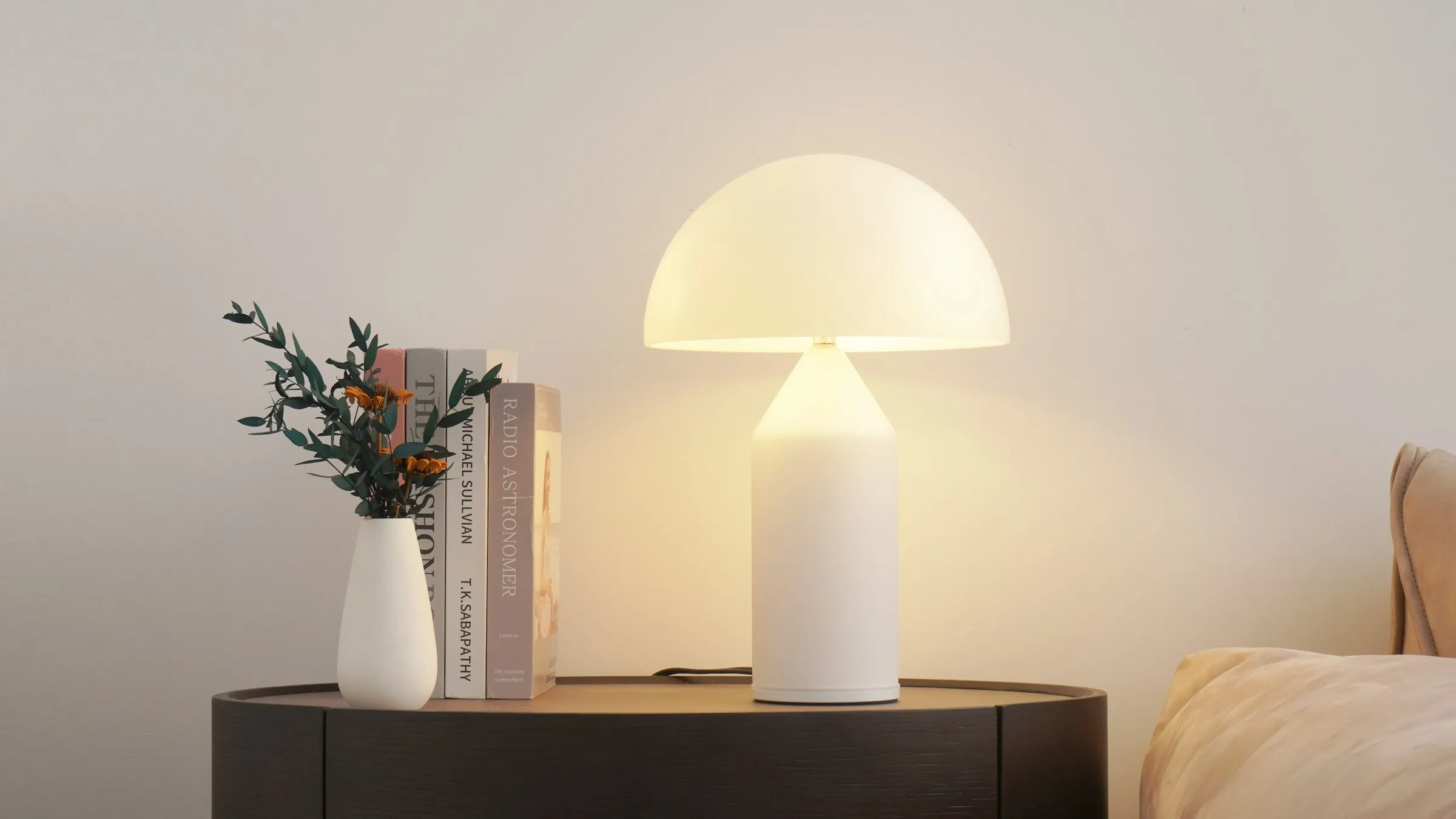
Photographs of expensive interiors are almost never lit from the ceiling. They are lit from three or four low sources scattered around the room at different heights, which is why they have shadows and depth instead of the flat, even, slightly institutional wash a single overhead fitting produces.
This is the cheapest correction available in a room, and it does not require replacing anything you own.
The rule that does most of the work
Three light sources, at three different heights, none of them the ceiling.
A table lamp at roughly seated eye level. A floor lamp standing taller behind or beside a seat. Something low — a small lamp on a shelf or a console. Turn the overhead off entirely and the room stops looking lit and starts looking inhabited.
Everything below is in service of that.
What to check before buying any lamp
Height, measured to the bottom of the shade
For a table lamp beside a chair or sofa, the bottom edge of the shade should sit at about the eye level of someone seated — roughly 40 to 42 inches from the floor. Since most side tables are 24 to 26 inches high, that puts the lamp itself in the 23 to 26 inch range. Taller and you look straight at the bulb; shorter and it lights the table rather than the room.
Floor lamps sit higher, generally 58 to 64 inches, so the shade clears a standing sightline and throws light across the room rather than into it.
Color temperature — the number nobody checks and everybody notices
Measured in kelvin. 2700K to 3000K is warm and is what you want in a living room. 4000K reads neutral and slightly clinical; anything at 5000K or above is daylight-white and will make a warm neutral room look gray and unfriendly.
If a lamp advertises multiple color temperatures, that flexibility is genuinely useful — but check that its warmest setting actually reaches 3000K.
Whether the bulb is included, and whether it can dim
Two separate traps.
Many lamps ship without a bulb, which is fine if you know. Some are explicitly not compatible with dimmable bulbs, which is much more annoying to discover after assembly, because dimming is most of the benefit of layered lighting. The listing will say — but it usually says it in the last bullet point.
E26 is the standard American screw base, so a lamp specifying E26 will take almost any bulb you can buy.
The switch, which you will use every single day
A rotary knob on the cord, a foot switch, or an inline switch. A floor lamp with a foot switch is meaningfully nicer to live with than one whose switch is up under the shade, because you never have to reach into a lit fitting.
Shade material
Linen and linen-look fabric diffuse light softly and warmly. Hard, glossy or metallic shades throw light up and down in a column instead of spreading it, so they can look dramatic and light a room badly.
The picks
Nourison Home 23″ Ceramic Table Lamp with Linen Shade
At 23 inches on a typical 24-inch side table, the shade lands almost exactly at seated eye level, which is the whole job. The ceramic base is hand-finished with a distressed texture, and the beige linen shade diffuses warmly rather than throwing a hard column.
Best for A side table beside a sofa or armchair — the primary lamp in the three-source rule.
- Height
- 24 in incl. finial
- Shade
- 14 in dia., beige linen
- Base
- Hand-finished ceramic
- Switch
- Rotary knob on cord
- Cord
- 60 in
How we chose Chosen by checking its published height against the seated-eye-level rule above and its shade material against the diffusion criterion. We have not seen this lamp in person. The listing notes each piece is hand-finished, so color and texture vary slightly from the photograph — that is a feature at this price, but worth knowing if you are buying two to match.
Specs checked
63.8″ Vintage Floor Lamp with Oatmeal Linen Shade
The most complete of the floor lamps we compared: a bulb is included, and its rotary switch steps through 3000K, 4000K and 6000K — so the warm setting the living room actually wants is available without a second purchase. Resin and iron with a weighted base, and it assembles without tools.
Best for A reading corner, and anyone who does not want to buy a bulb separately.
- Height
- 63.8 in
- Shade
- Oatmeal linen
- Color temps
- 3000K / 4000K / 6000K
- Bulb
- Included
- Base
- Weighted
How we chose Chosen because its published color-temperature range includes 3000K, which is the setting this guide actually recommends, and because the bulb is included where most competitors exclude it. We have not seen this lamp in person.
Specs checked
61″ Walnut Wood Floor Lamp with Linen Drum Shade
A walnut stand and a pre-assembled linen drum shade, which is the most convincingly expensive-looking lamp here, and the foot switch is the detail you will appreciate daily. But read the caveats before buying — they are real.
Best for A mid-century room where the lamp is meant to be seen, not just used.
- Height
- 61 in
- Stand
- Walnut wood
- Shade
- Pre-assembled linen drum
- Switch
- Foot switch
- Base
- E26
How we chose Chosen on construction and switch design. Two caveats from the listing itself, both of which matter given this guide's advice: the bulb is NOT included, and the lamp is explicitly NOT compatible with dimmable bulbs — so it cannot participate in a dimmed lighting scheme. It was also down to very low stock when we checked. We have not seen this lamp in person.
Specs checked
Start with one lamp, not three
If this is a whole-room project, the temptation is to buy everything at once. It is worth resisting for one evening. Put a single table lamp beside the seat you actually use, turn the overhead off, and sit in the room. It will tell you where the second light needs to go far more reliably than a floor plan will.