Dining
How to Choose a Dining Table That Fits
Manufacturers count seats by arithmetic. Rooms count them by elbows. The gap between the two is why so many dining rooms are uncomfortable at exactly the number they were bought for.
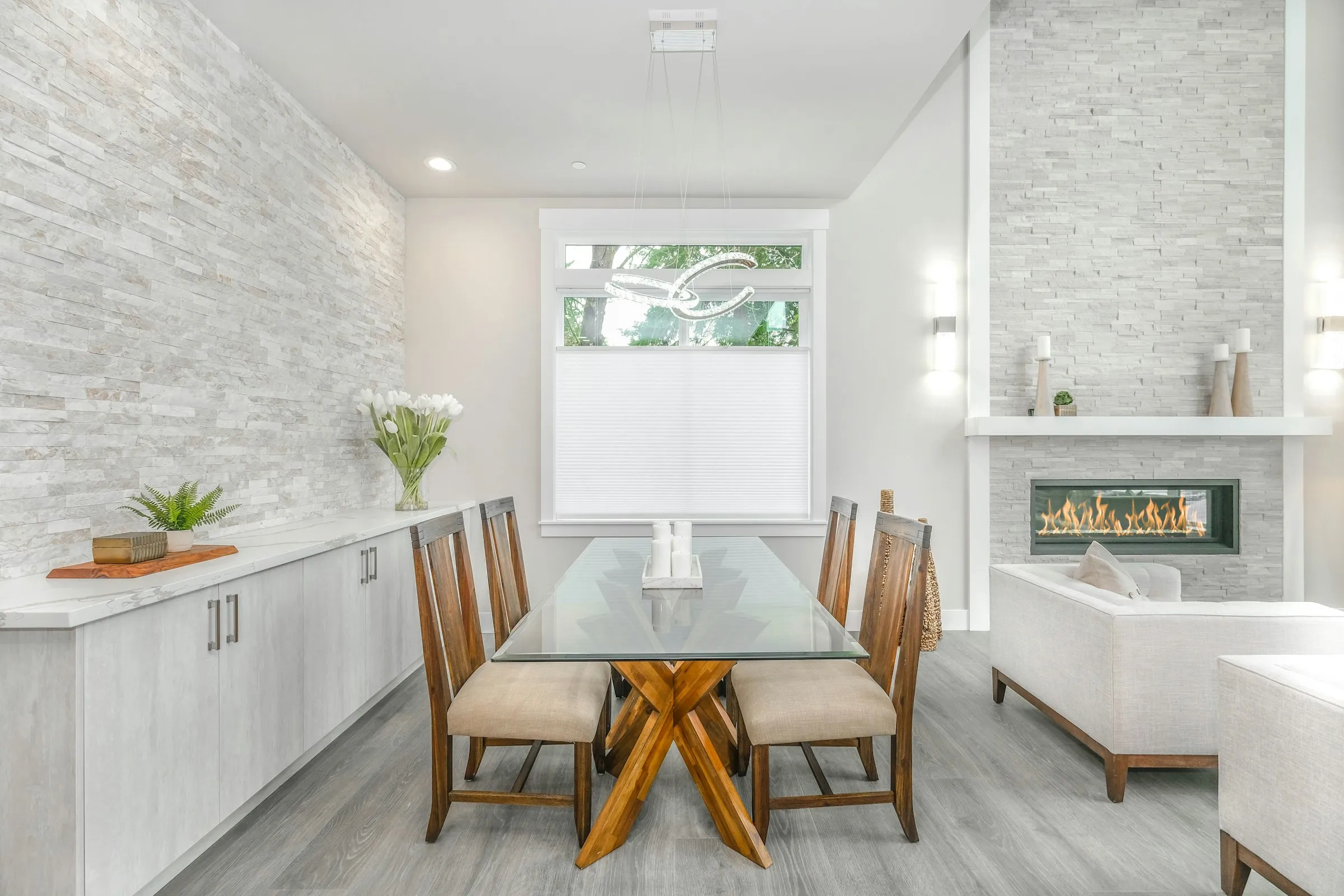
A dining table is the one piece of furniture where a listing’s headline number is most likely to be wrong for you — not because anyone is lying, but because “seats 8” is a statement about the table and you are asking a question about the room.
Two measurements settle it.
1. Twenty-four inches of table edge per person
That is the width one adult needs to eat without knocking elbows. Anything less and people eat with their arms tucked in.
Apply it honestly:
- A 72-inch rectangular table gives three places a side — six, comfortably, plus the ends at a squeeze.
- A 63-inch table gives two comfortable places a side. Four to six, not eight, whatever the title says.
- A round table uses its circumference. A 47-inch round measures about 148 inches around, which is six — and round tables genuinely do seat their number better than rectangles, because there are no corners where a chair cannot go.
Depth matters too. A rectangular table under 36 inches wide leaves no room for serving dishes down the middle once two people have plates opposite each other.
2. Thirty-six inches of clearance around it
Measured from the table edge to the wall or the next piece of furniture.
- 30 inches is the absolute minimum to pull a chair out and sit down.
- 36 inches lets someone walk behind a seated person.
- 48 inches is generous, and what makes a dining room feel like a good restaurant rather than a booth.
This is the constraint that actually decides your table size, and it is the one people skip. Measure the room, subtract 72 inches — 36 on each side — and whatever is left is the largest table that belongs there. Very often that number is smaller than the table people had in mind.
Height, and the number that ruins chairs
Dining tables are 28 to 30 inches high, and 30 is standard. Dining chairs have seats 17 to 19 inches high.
What matters is the gap: you want 10 to 12 inches between the chair seat and the underside of the tabletop. Less than 10 and thighs hit the apron — the rail running under the tabletop — which is the single most common reason a chair that looked fine is uncomfortable. If you are buying a table and chairs separately, check the apron height, not just the table height.
Pedestal versus four legs
An underrated decision. Four legs put a leg at each corner, which is exactly where a chair wants to go — so a four-legged table often seats fewer people comfortably than its dimensions suggest.
A pedestal base moves the support to the middle. Chairs go anywhere, and you can squeeze in an extra person at a push. The trade-off is stability at the edges: lean heavily on the corner of a pedestal table and it will tip more readily than a four-legged one.
The picks
Plank+Beam Classic 72″ Rectangular Dining Table
Solid wood top and solid wood legs — not a veneer over board — at the size that genuinely seats six by the 24-inch rule. The wirebrushed finish gives it visible grain texture, which is what stops a plain rectangle looking flat.
Best for A dining room with at least 12 feet in the long direction, once you have allowed clearance.
- Dimensions
- 72 × 36 × 30 in
- Top
- 3 solid wood panels
- Legs
- Solid wood
- Finish
- Wirebrush, non-toxic
How we chose Chosen because the construction line specifies solid wood for both top and legs, which is uncommon in this price range, and because 72 × 36 satisfies both the per-person and the serving-width rules above. At 36 in wide it needs a room about 12 ft long to keep 36 in of clearance at both ends. We have not seen this table in person.
Specs checked
Modway Crossroads 47″ Round Dining Table, Walnut
A pedestal base with four intersecting legs, which keeps the floor clear where chairs need to go. Round tables suit small rooms disproportionately well — no corners to walk into, and conversation works better at six than it does across a long rectangle.
Best for A room under about 11 feet square, or any dining space that has to double as a walkway.
- Diameter
- 47 in
- Base
- Intersecting pedestal
- Construction
- Rubberwood and MDF
- Seats
- Up to 6
How we chose Chosen for the pedestal base, for the reason set out above — chairs are not blocked by corner legs. The listing's claim of six checks out against the circumference rule (a 47 in round is roughly 148 in around, or six 24 in places), which is not something we can say about every seating claim in this category. Construction is rubberwood and MDF rather than solid throughout. We have not seen this table in person.
Specs checked
Muwuele Solid Wood Extendable Dining Table, 47.2–63″
FAS-grade rubberwood — a recognized hardwood grade rather than a vague claim — with a hidden lift mechanism rather than a leaf you have to store somewhere. Closed at 47.2 inches it suits a small room; open at 63 it takes a proper dinner.
Best for Everyday dining for four in a small space, with occasional guests.
- Length
- 47.2 – 63 in
- Material
- FAS grade rubberwood
- Extension
- Hidden lift mechanism
- Includes
- Table only, no chairs
How we chose Chosen for the extension mechanism and the stated timber grade. ⚠ We disagree with the listing's own headline: it is described as seating 4–8, but by the 24-inch rule 63 in gives two comfortable places a side, so treat it as four everyday and six at a push. We are recommending it as a small table that grows, not as a table for eight. We have not seen this table in person.
Specs checked
Tape it out first
Put painter’s tape on the floor in the exact footprint, then add 36 inches all round and tape that too. Live with it for a day and try walking past the outer line while someone sits at the inner one. It is a far better test than any measurement on a page, including all of the ones above.